


Dental Implants for Single vs. Multiple Teeth Replacement
Missing teeth affect more than just appearance. Tooth loss can impact chewing ability, speech, jawbone health, facial structure, and overall confidence.
Fortunately, modern dental implants offer one of the most advanced and long-lasting solutions for replacing missing teeth.
Whether a patient has lost one tooth or multiple teeth, implant dentistry provides highly effective restoration options that look, feel, and function like natural teeth. Today’s implant treatments are designed to improve aesthetics, preserve jawbone health, and restore full oral function.
Patients considering implants often ask:
Should I choose a single tooth implant or multiple implants?
What are the differences between treatment options?
Are implants permanent?
Which implant solution is best for multiple missing teeth?
How long does recovery take?

What Are Dental Implants?
Dental implants are titanium or zirconia posts surgically placed into the jawbone to replace missing tooth roots. Once integrated with the bone, implants support custom restorations such as:
Dental crowns
Bridges
Dentures
Implants are considered one of the most reliable forms of permanent tooth replacement because they:
Fuse with the jawbone
Prevent bone loss
Restore chewing strength
Mimic natural tooth structure
Improve smile aesthetics
Unlike removable dentures, implants provide excellent stability and long-term function.
Why Replacing Missing Teeth Matters
Ignoring missing teeth can lead to several oral health problems.
Tooth loss may cause:
Jawbone deterioration
Shifting neighboring teeth
Bite misalignment
Difficulty chewing
Speech problems
Facial sagging
Reduced confidence
Early missing teeth replacement helps preserve oral structure and overall dental health.
Single Tooth Implant: Ideal for One Missing Tooth
A single tooth implant is designed to replace one missing tooth without affecting adjacent teeth.
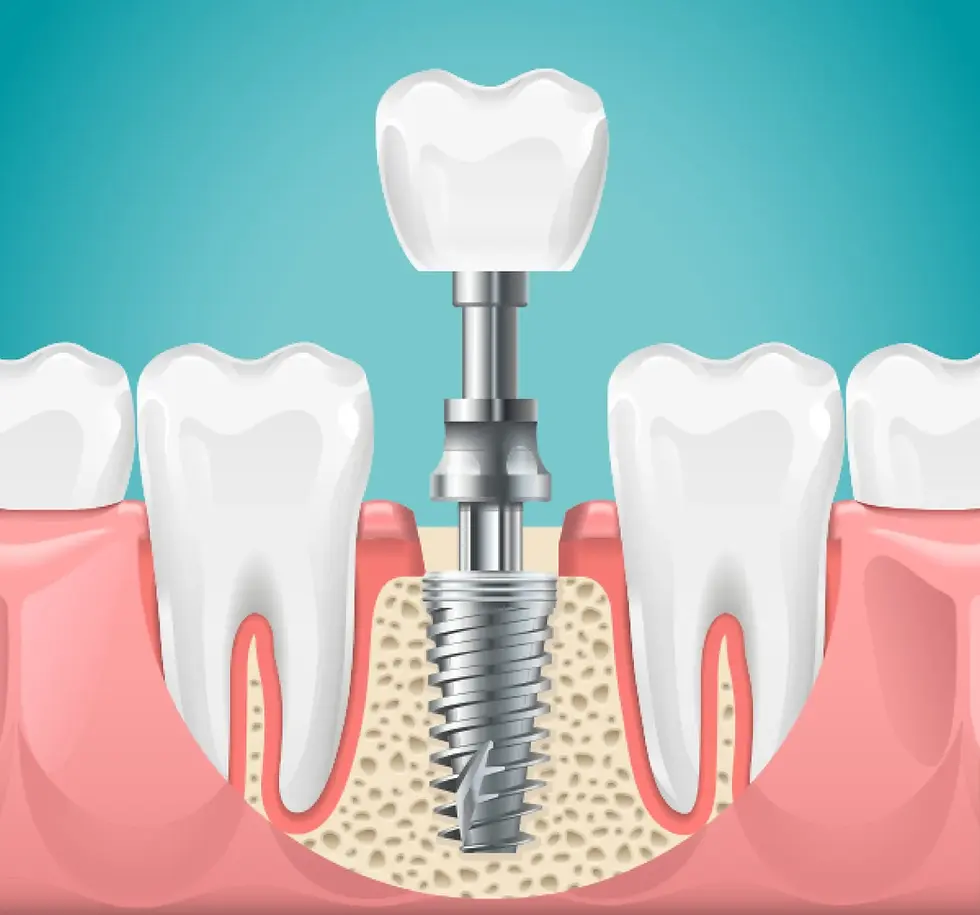
The implant acts as an artificial root and supports a custom dental crown.
Components of a Dental Implants - Single Implant
A typical implant restoration includes:
Implant post
Abutment
Crown
Together, these components create a natural-looking replacement tooth.
Benefits of Single Tooth Implants
1. Natural Appearance
Modern implant crowns are customized to match:
Tooth color
Shape
Size
Smile alignment
Most people cannot distinguish implants from natural teeth.
2. Preserves Neighboring Teeth
Traditional bridges often require grinding healthy adjacent teeth.
A single tooth implant preserves surrounding natural teeth.
3. Prevents Jawbone Loss
When a tooth is missing, the jawbone gradually deteriorates.
Implants stimulate the jawbone similarly to natural tooth roots.
4. Long-Term Durability
With proper care, implants can last decades.
Many patients enjoy lifelong implant success.
5. Improved Chewing Ability
Implants restore bite strength and allow comfortable eating.
Patients can typically enjoy:
Crunchy foods
Tough foods
Normal chewing function
Multiple Teeth Implants: Solutions for Several Missing Teeth
Patients missing multiple teeth may require more advanced implant restoration options.
Modern implant dentistry offers several solutions for multiple teeth implants.
Option 1: Implant-Supported Bridge
An implant supported bridge replaces several missing teeth using strategically placed implants.
Instead of placing one implant for every missing tooth, implants support a bridge restoration.
Advantages
Fewer implants required
Strong stability
Preserves jawbone
More comfortable than removable options
Best For
Patients missing consecutive teeth in one area.
Option 2: Implant-Supported Dentures
Implant supported dentures combine dentures with implant stability.
Unlike traditional dentures, these prosthetics attach securely to implants.
Benefits
Improved retention
Reduced slipping
Better speech
Greater chewing power
Enhanced confidence
Patients often report dramatic lifestyle improvements.
Option 3: Full Mouth Dental Implants
Patients missing all teeth may benefit from full mouth dental implants.
Popular full-arch solutions include:
All-on-4 implants
All-on-6 implants
Fixed implant bridges
These treatments restore entire dental arches with fewer implants.
Single Tooth Implant vs Multiple Teeth Implants
Feature | Single Tooth Implant | Multiple Teeth Implants |
Replaces | One tooth | Several or all teeth |
Restoration Type | Crown | Bridge or denture |
Surgical Complexity | Lower | Moderate to advanced |
Treatment Time | Shorter | Longer |
Cost | Lower overall | Higher investment |
Jawbone Support | Excellent | Excellent |
Smile Restoration | Targeted | Full smile restoration |
Both treatments provide highly effective long-term outcomes.
The Dental Implant Procedure
The dental implant procedure generally occurs in stages.
Step 1: Consultation and Examination
The dentist evaluates:
Bone density
Gum health
Missing tooth areas
Bite alignment
Medical history
Digital imaging and CBCT scans assist planning.
Step 2: Treatment Planning
A personalized implant plan is created based on:
Number of missing teeth
Bone condition
Cosmetic goals
Oral health status
Step 3: Implant Surgery
The implant post is surgically placed into the jawbone.
Healing begins immediately.
Step 4: Osseointegration
During healing, the implant fuses with the jawbone.
This process typically takes:
3–6 months
Strong integration ensures implant stability.
Step 5: Restoration Placement
Once healing is complete:
Crowns
Bridges
Dentures
Are attached to the implants.
The result is a fully restored smile.
Are Dental Implants Painful?
Most patients report less discomfort than expected.
Local anesthesia and modern surgical techniques make treatment highly manageable.
Mild temporary symptoms may include:
Swelling
Soreness
Minor bruising
Most patients return to routine activities within days.
Recovery After Implant Surgery
Healing varies depending on:
Number of implants
Bone grafting needs
Overall health
Smoking habits
Recovery Tips
Eat soft foods initially
Avoid smoking
Maintain oral hygiene
Follow dentist instructions carefully
Proper aftercare improves implant success rates.
Bone Grafting and Implant Preparation
Some patients lack sufficient jawbone density for implants.
Bone grafting may help rebuild bone structure before implant placement.
Bone grafting is commonly recommended for:
Long-term tooth loss
Severe bone shrinkage
Advanced periodontal disease
Healthy bone support is essential for long-term implant success.
Benefits of Dental Implants Over Traditional Dentures
Compared to removable dentures, dental implants offer:
Better stability
Improved chewing
Reduced slipping
Enhanced confidence
Better speech clarity
Jawbone preservation
Implants often feel significantly more natural.
Cosmetic Benefits of Implant Dentistry
Modern implant dentistry improves:
Smile aesthetics
Facial balance
Jaw support
Lip structure
Missing teeth can create facial collapse over time.
Implants help maintain youthful facial appearance.
Who Is a Good Candidate for Dental Implants?
Ideal implant candidates typically have:
Healthy gums
Adequate bone density
Good oral hygiene habits
Stable overall health
Even patients with bone loss may qualify after preparatory treatment.
Dental Implants and Long-Term Oral Health
Implants contribute to better long-term oral health by:
Preventing tooth shifting
Supporting bite stability
Reducing bone loss
Preserving jaw structure
They are one of the most predictable tooth replacement options available.
How Long Do Dental Implants Last?
With proper care, implants can last:
20+ years
Often a lifetime
Longevity depends on:
Oral hygiene
Smoking habits
Regular dental visits
Gum health
Common Myths About Dental Implants
Myth 1: Implants Look Fake
Modern implant restorations are highly natural-looking.
Myth 2: Implants Are Extremely Painful
Most patients report minimal discomfort.
Myth 3: Dentures Are Always Better
While dentures help many patients, implants often provide greater comfort and function.
Myth 4: Older Adults Cannot Get Implants
Age alone does not disqualify implant candidates.
Many seniors benefit greatly from implant-supported restorations.
FAQs
Are dental implants permanent?
Yes. With proper care, implants are considered a long-term or permanent tooth replacement solution.
Which is better: single implant or bridge?
A single tooth implant preserves neighboring teeth and prevents bone loss more effectively.
Can multiple teeth be replaced with implants?
Yes. Multiple teeth implants, implant-supported bridges, and full-mouth implant solutions are highly effective.
How long does implant recovery take?
Most healing occurs over several months as the implant integrates with the jawbone.
Are implants better than dentures?
For many patients, implants provide superior comfort, stability, and chewing ability.
Why Preventive Care Matters After Implant Treatment
Even though implants cannot develop cavities, surrounding gums remain vulnerable to infection.
Patients should:
Brush twice daily
Floss regularly
Attend professional cleanings
Avoid smoking
Healthy gums are critical for implant longevity.
The Emotional Impact of Restoring Missing Teeth
Tooth loss often affects:
Confidence
Social interactions
Self-esteem
Professional comfort
Implant dentistry frequently improves emotional well-being by restoring smile confidence and oral function.
Patients often feel more comfortable:
Smiling
Eating publicly
Speaking confidently
Taking photographs
Cost Considerations for Dental Implants
Implant costs vary based on:
Number of implants
Restoration type
Bone grafting needs
Surgical complexity
Materials used
Although implants involve a higher initial investment, they often provide excellent long-term value.
Choosing the Right Implant Dentist
Look for:
Surgical implant experience
Advanced imaging technology
Customized treatment planning
Modern implant systems
Comprehensive follow-up care
Choosing an experienced implant provider improves treatment outcomes.
Conclusion
Dental implants are among the most advanced and effective solutions for replacing missing teeth. Whether restoring one missing tooth or an entire smile, implant dentistry offers unmatched stability, aesthetics, and long-term oral health benefits.
A single tooth implant is ideal for preserving natural teeth and restoring isolated tooth loss, while multiple teeth implants, implant-supported bridges, and full-mouth restorations provide comprehensive solutions for more extensive tooth loss.
Modern implant procedures allow patients to regain:
Chewing ability
Smile confidence
Facial support
Oral function
Quality of life
With proper planning, skilled surgical care, and consistent oral hygiene, dental implants can provide life-changing results for decades.
Restore your smile permanently with advanced dental implant treatment Vadodara designed for comfort, stability, and natural aesthetics.


Comments